
What it really means for large refrigeration estates
Remote monitoring is widely discussed across retail, hospitality and facilities management, but the reality is often unclear. For many operators, it can sound technical, complex, or overly focused on data.
This Insight explains how remote monitoring for refrigeration estates is used in practice, and why it has become a foundation for managing refrigeration and HVAC assets at scale.
In practice, effective remote monitoring is much simpler than it is often perceived to be.
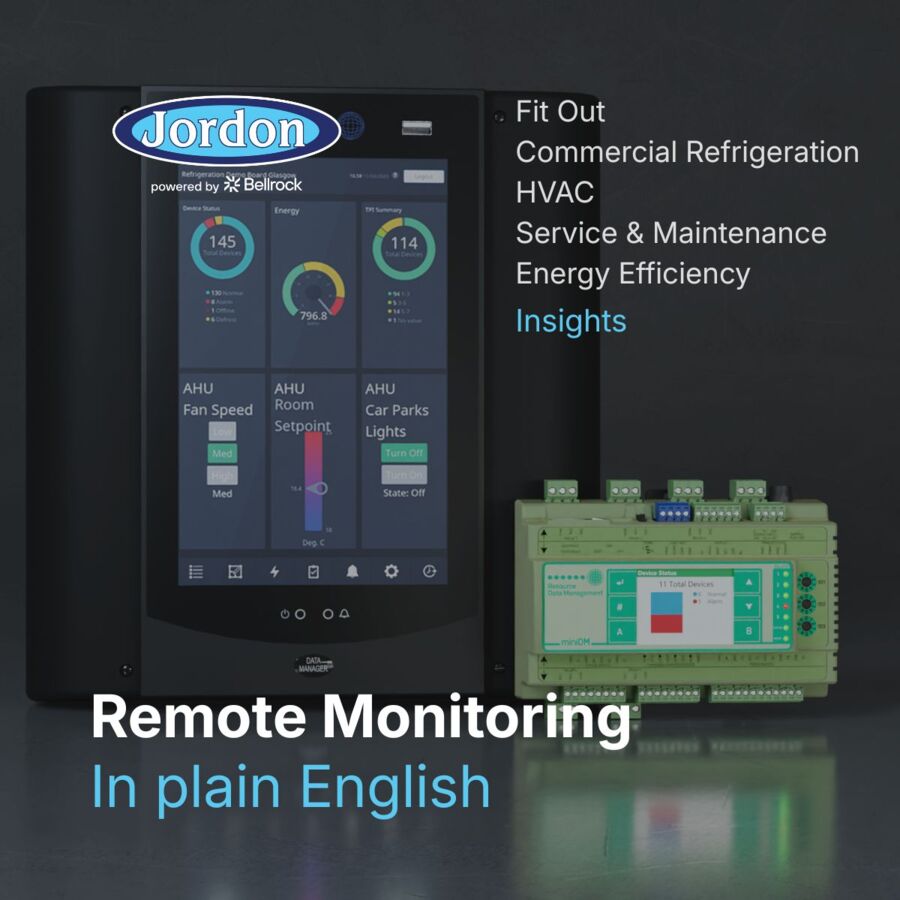
At its core, remote monitoring provides real time visibility of critical refrigeration and HVAC assets. Temperatures, performance and exceptions are tracked continuously, across individual sites or entire estates. This allows issues to be identified early, often before they develop into failures that risk stock, compliance or trading.
Why visibility matters at estate level
For large refrigeration estates, this level of visibility is what changes everything.
Rather than relying on reactive call outs or discovering issues after impact has already occurred, teams gain a clearer picture of what is happening across multiple locations at any given moment. Patterns can be identified, risks can be prioritised, and responses can be more informed and measured.
The real value of remote monitoring is not the volume of data it generates. It is what that data enables.
Early alerts allow intervention before faults escalate. Central oversight reduces reliance on individual site reporting. Estate wide insight supports better decision making, not just on maintenance activity, but on longer term performance and investment planning across refrigeration estates.
Technology supports decisions, it does not replace them
Importantly, technology alone is not the solution. Remote monitoring only delivers value when it is supported by experienced people who understand how to interpret information, assess risk, and decide when action is needed. Alerts require judgement. Data requires context. Accountability still matters.
As refrigeration estates grow in size and complexity, this combination of visibility, insight and expertise becomes a foundation for modern refrigeration management. It supports uptime, protects compliance, and creates confidence that issues are being managed proactively rather than reactively.
Remote monitoring is not about watching systems. It is about understanding environments and acting early to keep them performing as they should.
As monitoring data builds over time, it also creates a clearer picture of how assets are actually performing day-to-day. That insight becomes increasingly valuable when organisations begin to explore efficiency, energy use and longer term optimisation decisions, grounded in real operating conditions rather than assumptions.
What this means in practice
For operators managing large refrigeration estates, remote monitoring provides confidence. Confidence that assets are visible, risks are identified early, and decisions are based on real conditions rather than assumptions.
When combined with experienced teams who understand refrigeration environments, remote monitoring becomes more than a technical layer. It becomes a practical foundation for managing performance, compliance and uptime at scale.
At The Jordon Group, remote monitoring is part of a wider approach to refrigeration and HVAC management, focused on clarity, early intervention and long term performance across complex estates.